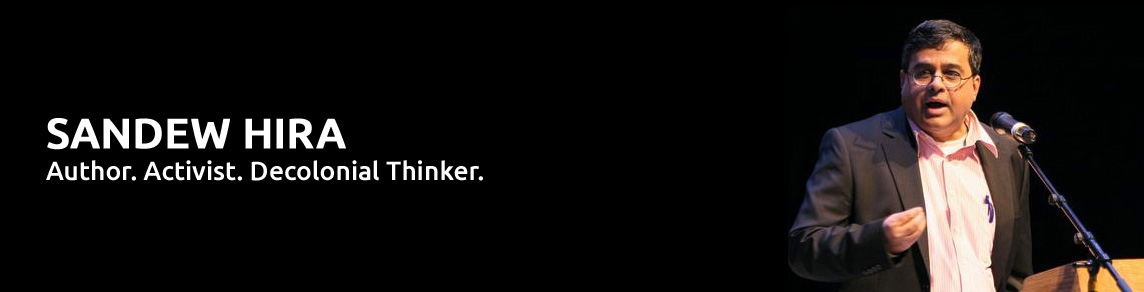
Presentation for Founding conference of the International Legal and Human Rights Union
Greetings to the organizers of the International Legal and Human Rights Conference in Support of the Palestinian People in Yemen.
Let me start with a mourning and commemoration of the martyrdom of Imam Ali Khamenei, who championed the cause of the liberation of Palestine. I also want to express me deep appreciation for the support that the people of Yemen led by their leader Al-Sayyid Abdul Malik Badruddin Al-Houthi has given to this cause. This cause is not just a Muslim cause, it is cause for the whole of humanity.
Now I will deal with the topic of how to mobilize legal and human rights mechanisms at the international level in support of the struggle of the Palestinian people. There are three aspects to this topic.
First, we need a critique of the current framework of human rights embodied in the Universal Declaration of Human Rights (UDHR) adopted in 1948 by the United Nations.
Second, we need to present alternative frameworks that enables us to be more effective in our mobilization.
Third, we need to outline the practical implications of the alternative frameworks.
My main critique of the Universal Declaration of Human Rights is that it proclaims Eurocentrist values as universal values and Eurocentrist thought as universal thought. This declaration takes the individual, not a human collective, as the starting point for human rights. The majority of the 30 articles of declaration and the preamble deals with individual rights: freedom of speech and belief and freedom from fear, the right to life, liberty and security, the rejection of torture, or cruel, inhuman or degrading treatment or punishment, the rejection of arbitrary arrest, detention or exile, the right to freedom of movement etc. The declaration does not talk about duties, only about rights. That is in line with the philosophy of liberalism during the European Enlightenment that focused on the relationship between individual and authority (the catholic church, the government). The problem of individual and society and thus the problem of duties toward society was not part of their narrative.
My critique of this concept of human rights is as follows. Individual rights are important rights. But they are not the only rights in a society. There are also social rights, rights of a community. If you don’t acknowledge the need to also respect social rights and focus only on individual rights, then in the event where social and individual rights collide, you will invariably opt for protecting individual rights against social rights. You might not even want to discuss the question of a balance between individual and social rights, because you don’t acknowledge the need to respect social rights.
The rights of Palestinians are not only individual rights, but also the rights of a community to statehood and sovereignty.
My other critique of the Eurocentric concept of human rights is that it claims to be universal, but in essence it is Eurocentric. The Universal Declaration of Human Rights is a Eurocentric Declaration of Human Rights. There are other declarations of human rights.
In 1986 the Organization of African Unity, later replaced by the African Union, adopted The African Charter on Human and Peoples’ Rights (ACHPR) also known as the Banjul Charter in Nairobi, Kenya. The African Commission on Human and Peoples’ Rights is headquartered in Banjul, the capital of Gambia.
In 1990 the Organization of Islamic Cooperation (OIC) came together in Cairo, Egypt, and adopted the Cairo Declaration on Human Rights in Islam (CDHRI). I will discuss this declaration. Individual freedoms are guaranteed such as the right to life (article 2), the right to safety from bodily harm (article 2.d), the right to be acknowledged as a person (article 8), the right to free movement (article 12), the right to property (article 15), freedom of expression (article 22). But is also acknowledge the impact of colonialism on the colonized communities. Article 11 says: “(a) Human beings are born free, and no one has the right to enslave, humiliate, oppress or exploit them, and there can be no subjugation but to God the Most-High. (b) Colonialism of all types being one of the most evil forms of enslavement is totally prohibited. Peoples suffering from colonialism have the full right to freedom and self-determination. It is the duty of all States and peoples to support the struggle of colonized peoples for the liquidation of all forms of colonialism and occupation, and all States and peoples have the right to preserve their independent identity and exercise control over their wealth and natural resources.”
This frameworks is a better tool to mobilize legal and human rights mechanisms at the international level in support of the struggle of the Palestinian people. It enables us to develop a better argument in our solidarity work.
So if we want to mobilize legal and human rights mechanisms at the international level in support of the struggle of the Palestinian people we should do it on the fundamental level of the conceptual frameworks used for human rights.
Sandew Hira
The Hague
March 4, 2026